
Revolutionizing Quantum Optimization
Two groundbreaking inventions that harness colloids, nanoparticles, and phase change for classical and quantum computing.
Patent Pending
Two groundbreaking inventions that harness colloids, nanoparticles, and phase change for classical and quantum computing.
Patent Pending"The Poor Man's Quantum Computer"
A three-dimensional computing and memory device that grows and dissolves its own metallic circuitry on demand inside a sealed, liquid-filled vessel. An electrode array drives nanoparticle assembly via electric fields, creating reconfigurable conductive pathways through the bulk liquid volume.
Conductive pathways form throughout a three-dimensional volume, not on a flat chip surface.
Electrochemical filament growth and dielectrophoretic particle chaining provide two independent switching mechanisms.
Pathways are grown with a voltage pulse, sensed via impedance measurement, and dissolved with a reverse pulse.
A "liquid FPGA" where the interconnect topology is rewritten at will — circuitry that rewires itself.
Patent figure set illustrating the vessel architecture, dual pathway formation mechanisms, write-read-erase operations, Fibonacci sphere electrode layout, crosstalk management via lock-in impedance detection, and three-dimensional reconfigurability.
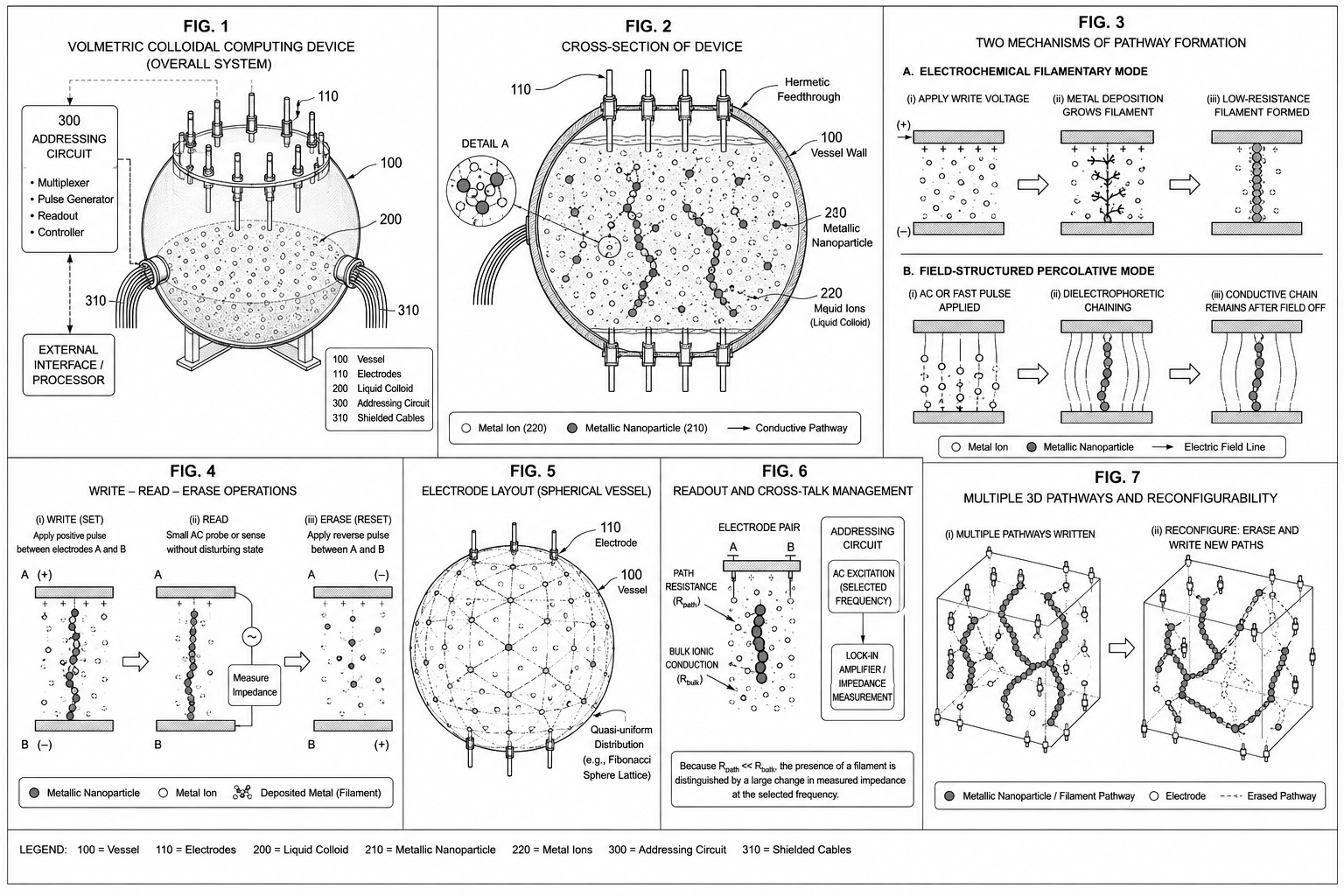
Fig. 1–7: Complete technical architecture of the Volumetric Colloidal Computing Device
Building on the field-assembly techniques of the Volumetric Colloidal Computer, the Phase-Change Quantum Annealer introduces semiconductor quantum dots as qubit elements. By vitrifying the colloid into an amorphous glass at cryogenic temperatures, it enables quantum annealing operations through electron tunneling between precisely positioned quantum dots.
Rapid cooling transforms the liquid into an amorphous glass, locking quantum dots in their field-assembled positions with no crystal defects.
Metal nanoparticles act as positioning scaffolds; semiconductor quantum dots serve as the actual qubits.
Quantum states are read via fluorescence spectroscopy — non-destructive measurement that preserves coherence.
Focused heating locally melts and refreezes selected regions, enabling partial reconfiguration without full reset.
Patent figure set illustrating the cryogenic vessel with optical access, two-species nanoparticle system, field-assembled scaffold formation, vitrification and scaffold removal process, quantum annealing energy diagram, optical fluorescence readout chain, thermal gradient reconfiguration, and full operational flowchart.
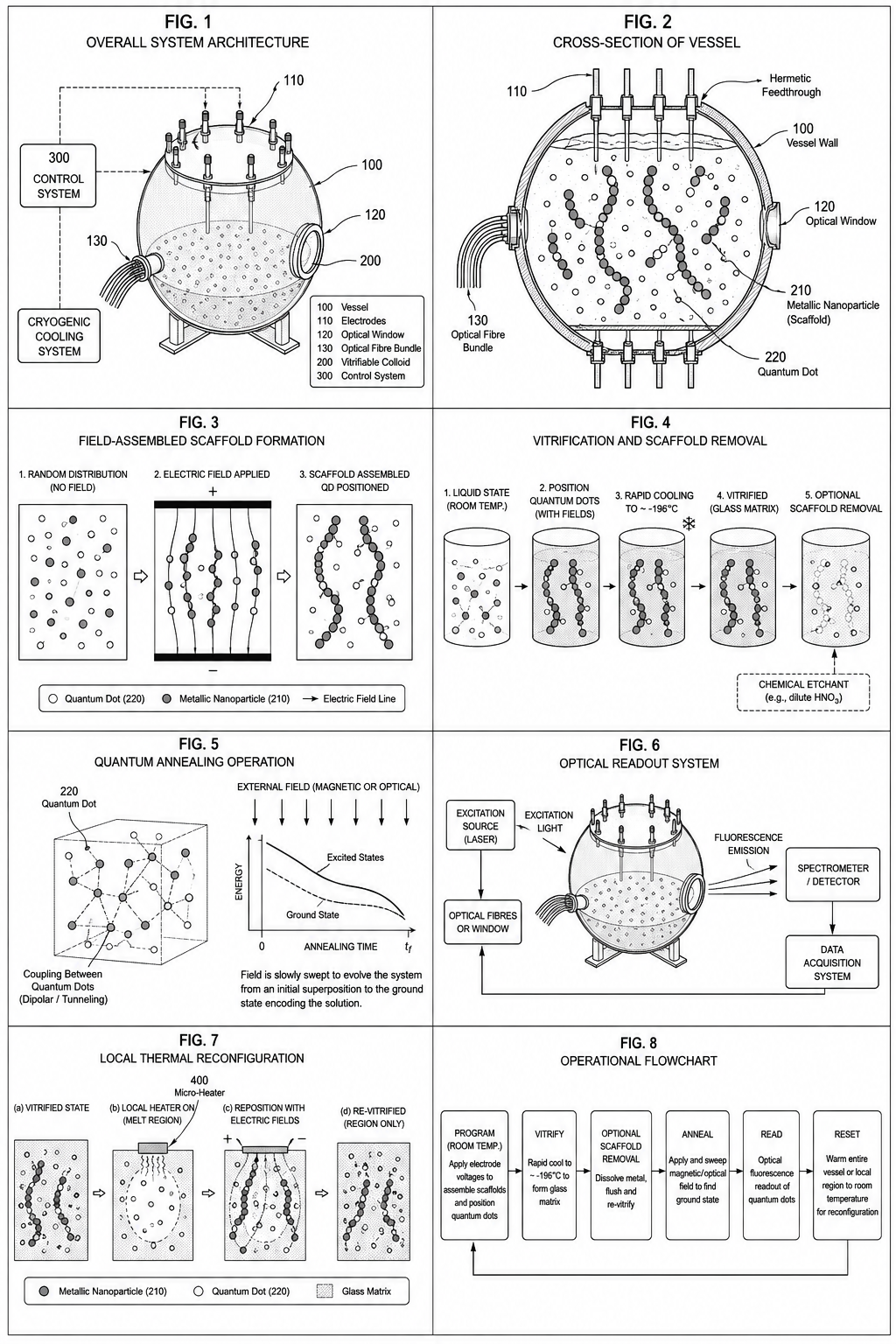
Fig. 1–8: Complete technical architecture of the Phase-Change Colloidal Quantum Annealer
Step 1 — Program (Room Temperature): Electrode voltages assemble metallic nanoparticle scaffolds that position quantum dots at precise spacings in the liquid colloid.
Step 2 — Vitrify: Rapid cooling to approximately -196°C transforms the carrier fluid into an amorphous glass, locking all particle positions.
Step 3 — Anneal: An applied magnetic or optical field sweeps the quantum dot array from an initial superposition toward its ground state via quantum tunneling — encoding the solution to an optimization problem.
Step 4 — Read: Fluorescence spectroscopy reads the quantum state of each dot without collapsing the system.
Step 5 — Reset or Reconfigure: Warm the entire device to reset, or locally melt and refreeze a region to adjust specific couplings.
Logistics routing, scheduling, resource allocation, and combinatorial problems that are intractable for classical computers.
Protein folding and molecular configuration problems accelerated by quantum annealing.
Portfolio optimization, risk analysis, and complex derivative pricing.
Weight optimization and training acceleration for neural networks and deep learning models.

Michael McFadden is an independent researcher and inventor exploring the intersection of nanotechnology, computing, and complex fluids. His work spans classical reconfigurable computing, quantum annealing, and novel approaches to programmable matter.
The Phase-Change Quantum Annealer builds directly upon his prior invention, the Volumetric Colloidal Computer — extending the field-assembly platform into the quantum domain through vitrification, quantum dot qubits, optical readout, and thermal gradient reconfiguration.
For licensing, partnership, investment, or press inquiries, please contact:
contact@pcqannealer.com